
Introduction
There are various historical precedents for the reuse of decolonized architecture. These depended generally on the location, period, and process of decolonization. Evacuated colonial architectures were alternately understood as symbols of racist ideologies, as physical entities embodying power relations, as military weapons or ammunition, as the sites and instruments of a crime and even as haunted places. In other situations they were seen as economic resources, bargaining chips, and even as “piles of bricks,” the accumulation of the materials composing them.
Three general approaches in dealing with evacuated colonial architecture could be discerned: destruction, re-occupation, and subversion. These approaches were sometimes used simultaneously.
Destruction
The popular impulse for destruction seeks to spatially articulate ‘liberation’ from an architecture understood as a political straitjacket, an instrument of domination and control. If architecture is a weapon in a military arsenal that implements the power relations of colonialist ideologies, then architecture must burn. If architecture is a weapon in the military arsenal of colonial rule, then architecture must burn. The impulse of destruction seeks to turn time backwards, reverse development into virgin nature, a tabula-rasa on which a set of new beginnings could be articulated.
However, time and its processes of transformation can never be simply reversed: rather than the desired romantic ruralization of developed areas, destruction generates desolation and environmental damage that may last for decades. In 2005 Israel evacuated the Gaza settlements and destroyed 3,000 homes, creating not the promised tabula-rasa for a new beginning but rather a million and a half tons of toxic rubble that poisoned the ground and water aquifers. The decontamination process has been greatly impeded by the complete closure of the Gaza strip – which is the new form that Israel’s occupation has taken.
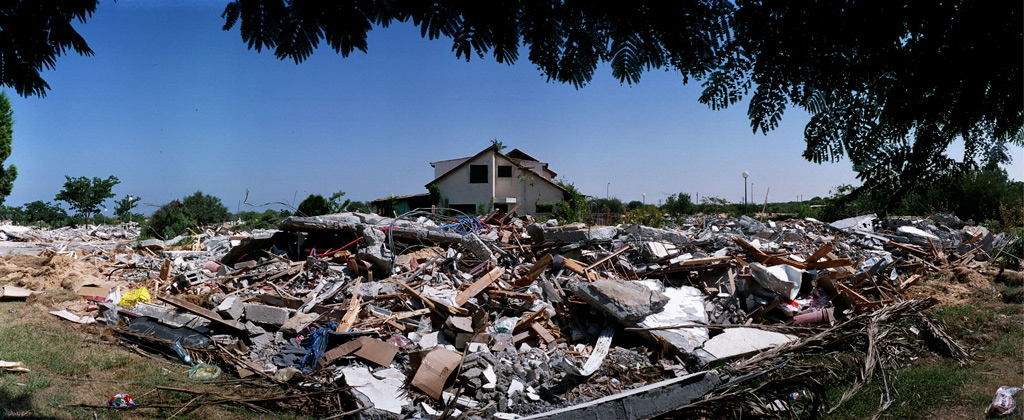
Courtesy: UNEP – United Nations Environment Programme
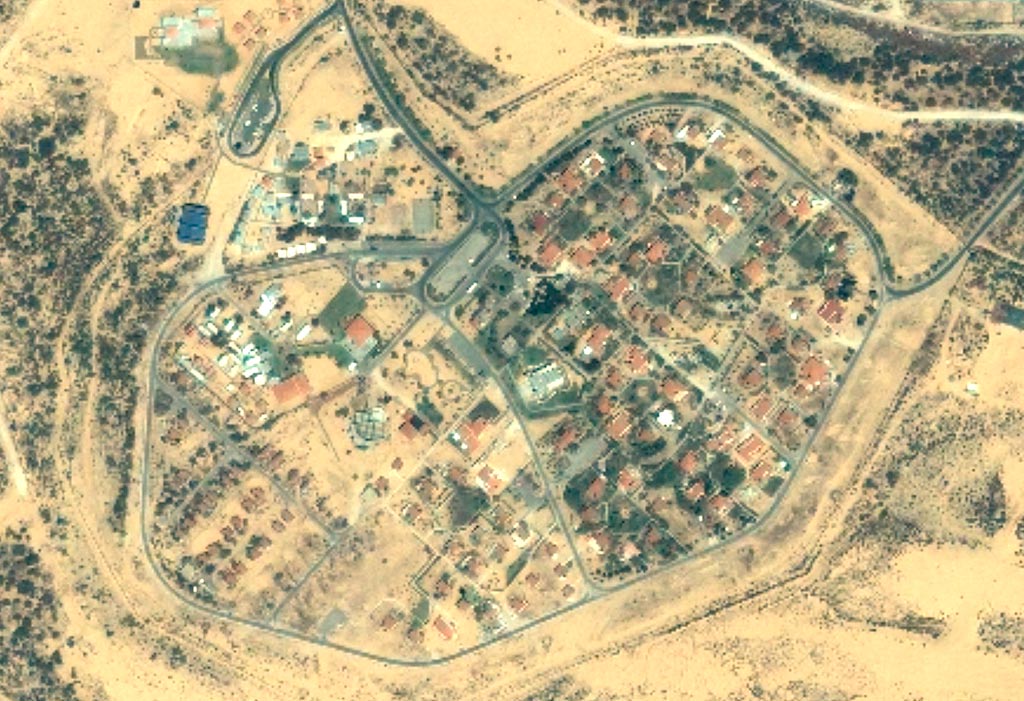
 Atzmona before (June 2005) and after (2006) its destruction by the Israelis. Courtesy: ARIJ
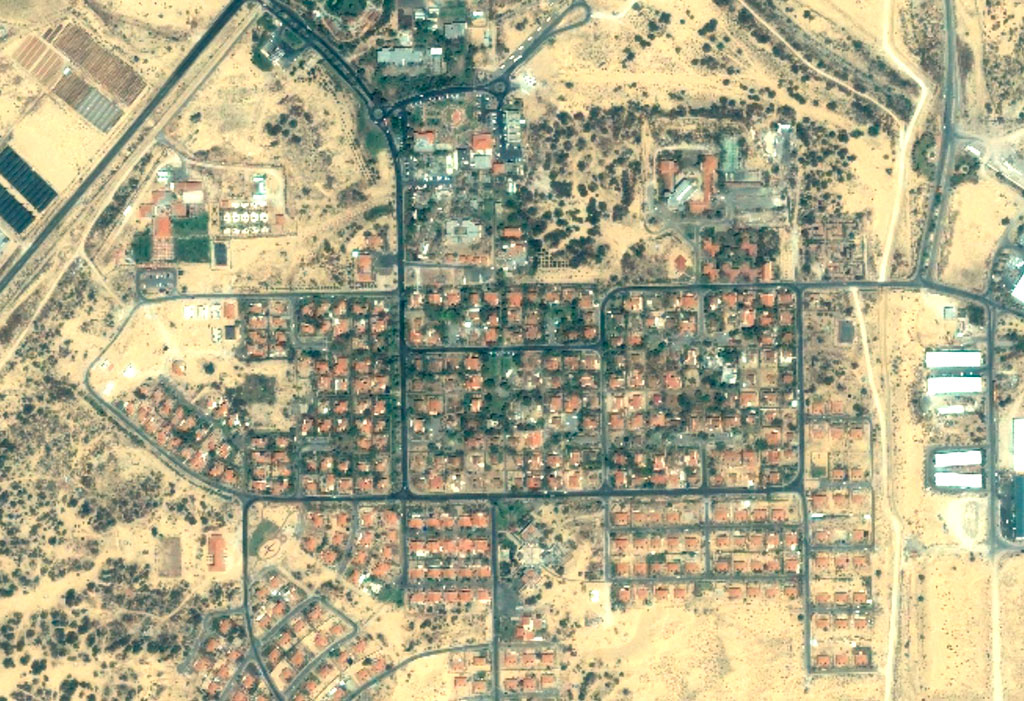
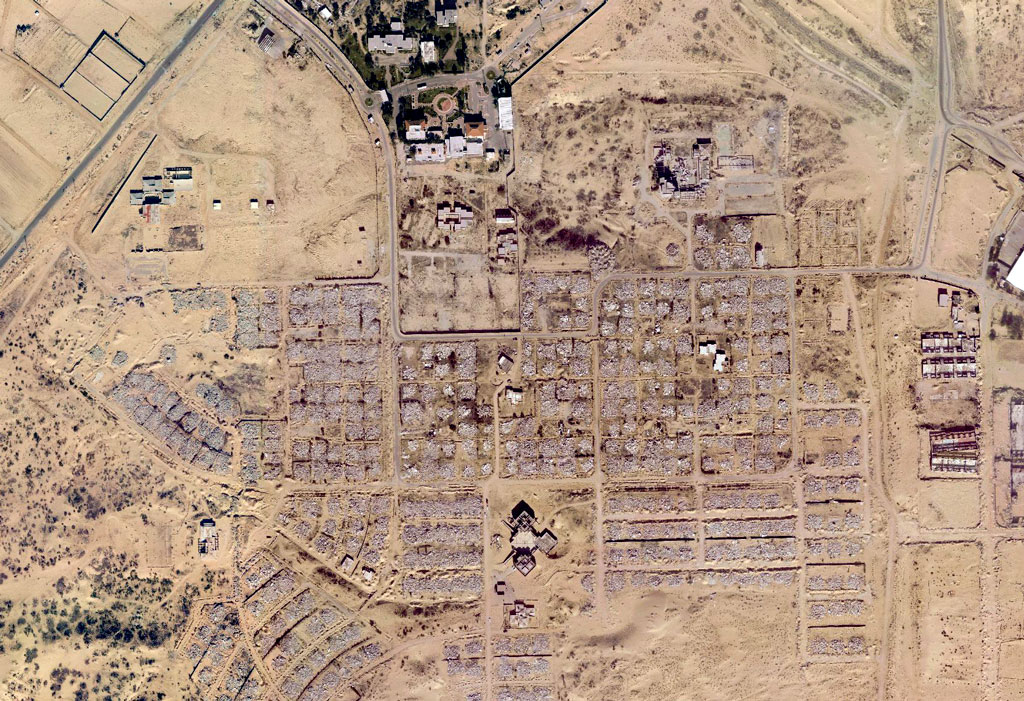 Neve Decalim before (June 2005) and after (2006) its destruction by the Israelis. Courtesy: ARIJ
Re-use
The other impulse is to impose political continuity and order under a new system of control. It is thus not surprising that post-colonial governments tended to reuse the infrastructure set up by colonial regimes for their own emergent practical needs of administration. Evacuated infrastructure and built structure was often also seen as the legacy of ‘modernization’ and as an economical and organizational resource. A strong temptation present throughout the histories of decolonization was thus to reuse them in the very same way they were used under colonial regimes. Such repossession tended to reproduce some of the colonial power relations in space: colonial villas were inhabited by new financial elites and palaces by political ones, while the evacuated military and police installations of colonial armies as well as their prisons were reused by the governments that replaced them .
Using Israeli residential and military areas would, similarly, establish a sense of continuity rather than of rupture and change. In the context of present day Palestine, reusing the evacuated structures of Israel’s domination in the same way as the occupiers did — the settlements as Palestinian suburbs and the military bases for Palestine security needs – would mean reproducing their inherent alienation and violence. The settlement’s system of fences and surveillance technologies would thus enable their seamless transformation into gated communities for the Palestinian elite.
Re-use: Al-Muqata (Ramallah)
From Hollow Land, Eyal Weizman (2007):
In the British Mandate of Palestine, during the Arab Revolt of 1936-9, British forces erected a string of military installations near or within Palestinian cities. Most of the British military infrastructure that remained in Israeli territory after the 1948 war later served as police stations and military bases. Some of these bases, built within Palestinian areas, were perfectly placed to continue the tactical task of population control for which they were originally built.
One such, Al-Muqata in Ramallah, was originally constructed by the British as a police headquarters, then used as a base and prison in the Jordanian Army between 1948 and 1967, and in the same capacity by the IDF after 1967. In 1993 it became Arafat’s compound-headquarters until its almost complete destruction by the Israeli military in spring 2002.
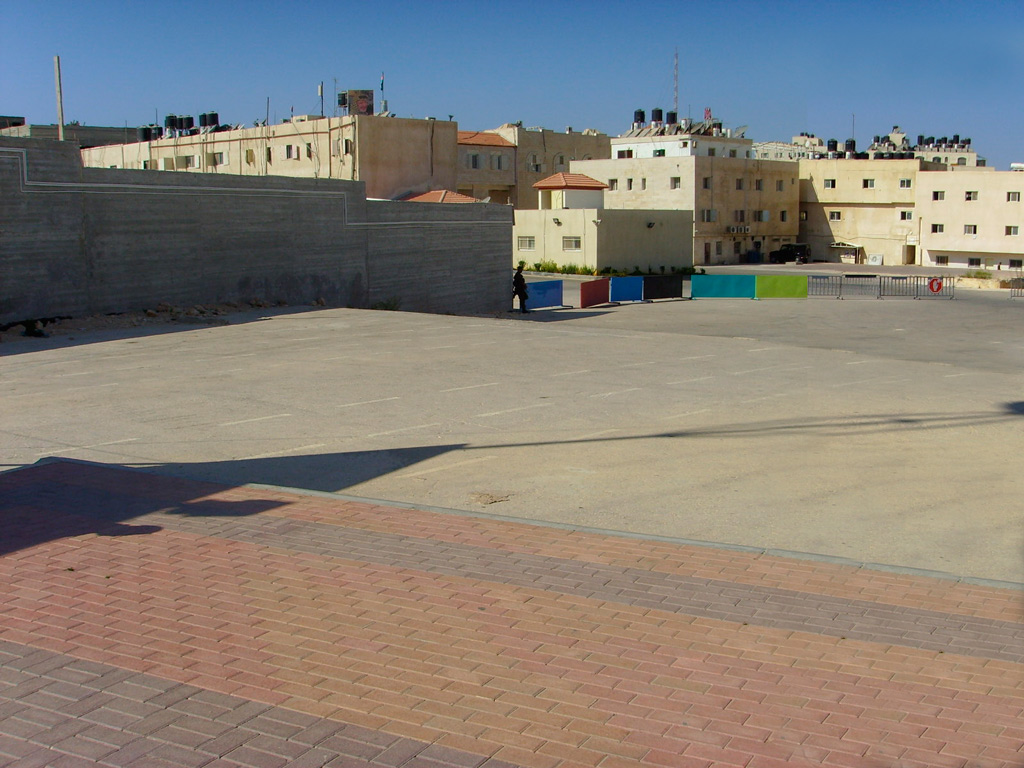
Al-Muqata – October 2007. Source: Wikipedia
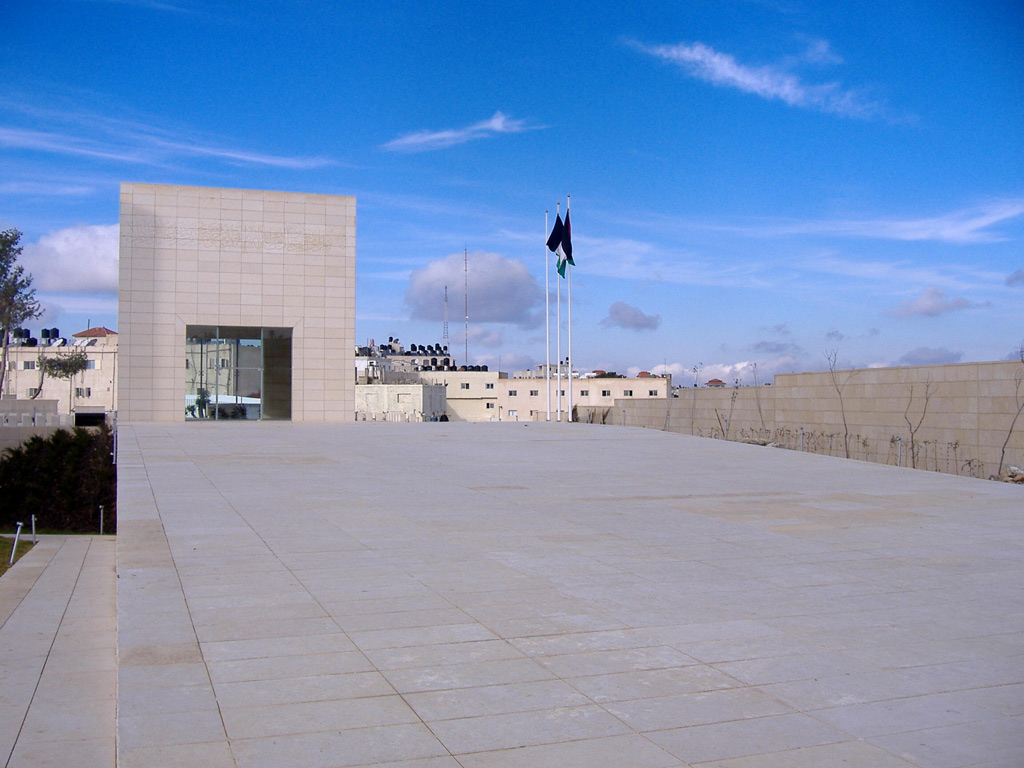 Al Muqata – Arafat’s mausoleum – January 2008. Source: Wikipedia
Eyal Weizman:
This is the question of history; there is always constant recycling of cultures – buildings and languages. It is not just the reorganization of the space. It is the idea of inhabiting the house of your enemy. You negotiate this transformation differently. This could be the break in ideology, in the radical order of things. You inhabit the house of someone who wanted to displace you, who wanted you dead. Returning back to your land, but even though it is your land you are foreign in it because is has been colonized. You go back to your place but the space is not the same and you are not the same.
Sandi Hilal:
Actually a lot of people we have spoken with say that they don’t want to live in a place where someone could knock on the door and say, “This is my house”. Especially for Palestinians because they have already lived this kind of tragedy and they were the victims. If you reverse that, you are becoming the one who does not have the original keys. And somebody else somewhere would have the original keys.
When I go to Jerusalem, to Jaffa, I see Arabic architecture. All the time I see these homes, original Palestinian homes and I belong to this architecture and these places. Why, I wonder, would Israelis accept to have these homes? Why because they are a sign and proof that the homes and land belonged to other people. Thinking about Decolonizing Architecture, I think that using the places in different ways you must internalize it and begin to think of it as belonging to you the moment you start to use it. That is the only explanation I can think of to understand why Israelis chose to live in those homes.
EW:
If we think about processes of decolonization and this revolutionary moment, there is another category – Victory. Kind of simple and almost obscene, but present. The Algerians won the war and kicked the French out military. As well as when we speak about the Nakba. When you walk into the house, you feel like it is yours because you are the victor. Now, when you are given the space as part of a semi-compromising, mushy political process that is not really liberation it is a different feeling.
So the Gaza evacuation, rightly so, was seen as resisting Israeli military pressure. I want to suggest a category of Victory.
SH:
It is a strange category for Palestinians because every time we felt close to victory, the situation became worse than it was before. Thinking about having a settlement and an act of victory is difficult for me. It is easier for me to imagine finally having more openness.
EW:
It is a completely non-contemporary category. Maybe we should destroy it.
SH:
It reminds me of this old man in a refugee camp. We were speaking about his land, by chance. And he said, “Let me tell you story”. He is very old and had this very nice, traditional voice,
“Let me tell you a story. When the Nakba happened I was 15 years old. Two Jewish people were our neighbors and they wanted to buy our land. My father was shocked, why would he sell his land? They tried to convince my father to take the money because if the Palestinians lose and we kick you out at least you would have sold your land. And if you win then you will still have your land, you win both ways. At that moment, my father kicked them out.”
Selling the land would have been accepting the loss. You would have lost both ways. It is about your land and having the right of your land. In that moment, this man refused to sell his rights. It is a matter of justice and rights. This is what it is all about, not about victory.
Subversion
We also know, however, that evacuated colonial architecture doesn’t necessarily reproduce the functions it was designed for. There are examples of other uses, both planned and spontaneous, that have invaded evacuated colonial architecture, subverted their programs and liberated their potential. Even the most horrifying structures of domination can yield themselves to new forms of life. Believing in the potential of existing forces to shape reality, the starting point of our investigation is the most complex option of the three – the strategy of subversion – which speculates on the use of colonial architecture for purposes other than those they were designed to perform. For this reason, the project seeks to spatialize a set of possible collective functions into the abandoned military structures and the evacuated houses of the colonists. What new institutions and activities can model the evacuated space and what physical transformations do these spaces require? The guiding principle is thus not to eliminate the power of the occupation’s built spaces, but rather to reorient its destructive potential to other aims. We believe that if the geography of occupation is to be liberated, its potential must be turned against itself.
Given the scale of Israeli construction in Palestine and the need for housing, all three approaches may need to be applied and simultaneously coexist. Some areas of settlements will be destroyed, some reused and others subverted. Because the reuse of the colonial architecture is a general cultural/political issue, we do not seek to present a single, unified architectural solution, but rather “fragments of possibility”.
This is our starting point in dealing with the scenario of the evacuation of Israeli colonies and military camps, calling for the subversion [transformation] of the evacuated spatial infrastructure of these colonies, using their structures to ends other that those they were designed for.
Subversion: Staro Sajmište [old fair ground] (Belgrade – Sebia)
Demonstrating the power of life over structure was the conversion, near Belgrade, of Staro Sajmište, the old fairground built in the 1938 around a central circular structure according to an optical layout to showcase new technology, into a Nazi concentration camp during WW2. From all concentration camps in Europe, this one was the closest to a city. From Belgrade, people could directly watch into the camp. The visual order of exhibition turned into the logic of surveillance and control. After the war this site has turned into a Gypsy camp-village. The circular layout has thus been interpreted in radically different fashions. From a display mechanism, to a site of incarceration and murder, and then a site of renewed communal life, now again under threat.
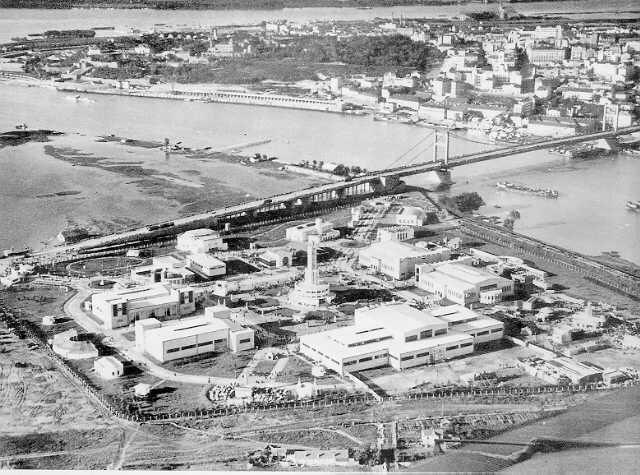
Staro Sajmište. Source: Google
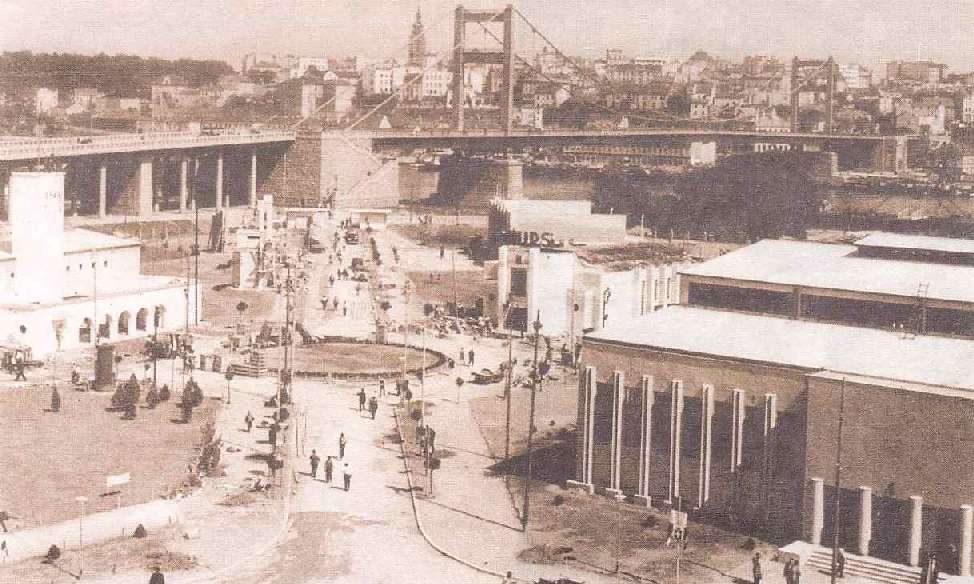
Staro Sajmište. Source: Skyscrapercity
Eyal Weizman telling the history of Staro Sajmište:
http://youtu.be/CaqDWTzLa_8
Subversion: Fossoli / Nomadelfia (Carpi – Italy)
Fossoli started as a camp where Jews were imprisoned before being deported to the death camps in the east. After WW2, in 1947 the priest Zeno Saltini occupied the camp together with the catholic group Piccoli Apostoli and founded the community Nomadelfia there, where orphans were welcome. They changed the size of the windows, making them much larger to reflect the new life emerging. The place where they used to gather all the prisoners had been turned into a cinema. They transformed the ground from a flat and barren surface to a planted landscape. Now it is a museum and the fence around the camp has been built and destroyed many times depending on the use of the building – camp, orphanage, refugee camp (from 1953 until the end of the ’60s dalmatian refugees lived there), museum. In this case you have layers of how life changed the place. The doors which were built to be very small, were changed to be much larger. The camp watchtower was transformed into a church. The addition of the church changed the fabric of the camp. Fondazione Fossoli; Nomadelfia
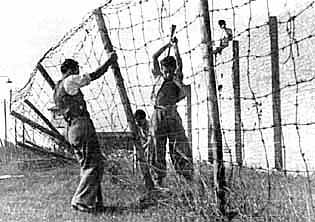 The occupation of the camp in 1947. Source: Nomadelfia.it
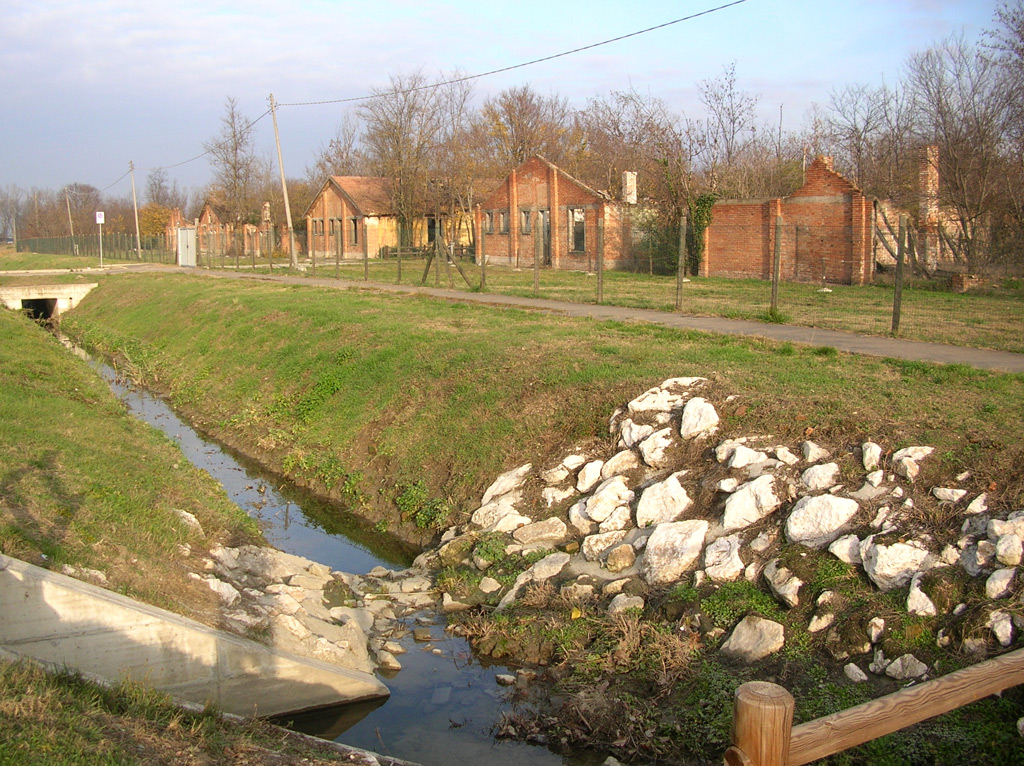
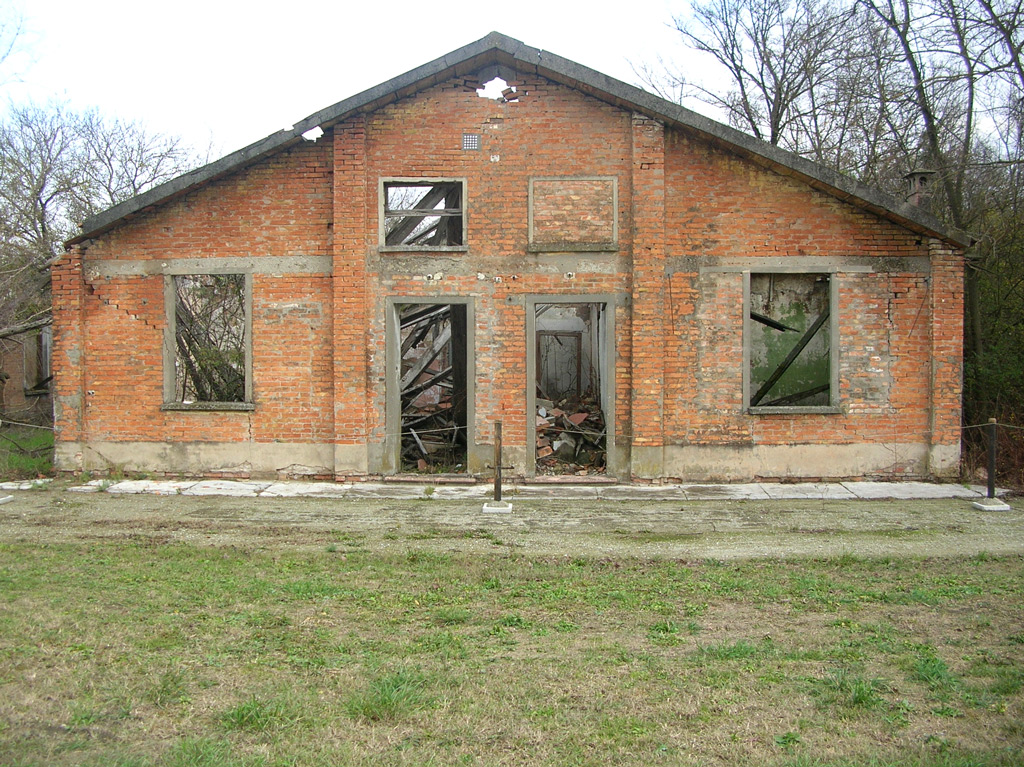
Fossoli barrack transformed into a Nomadelfia house
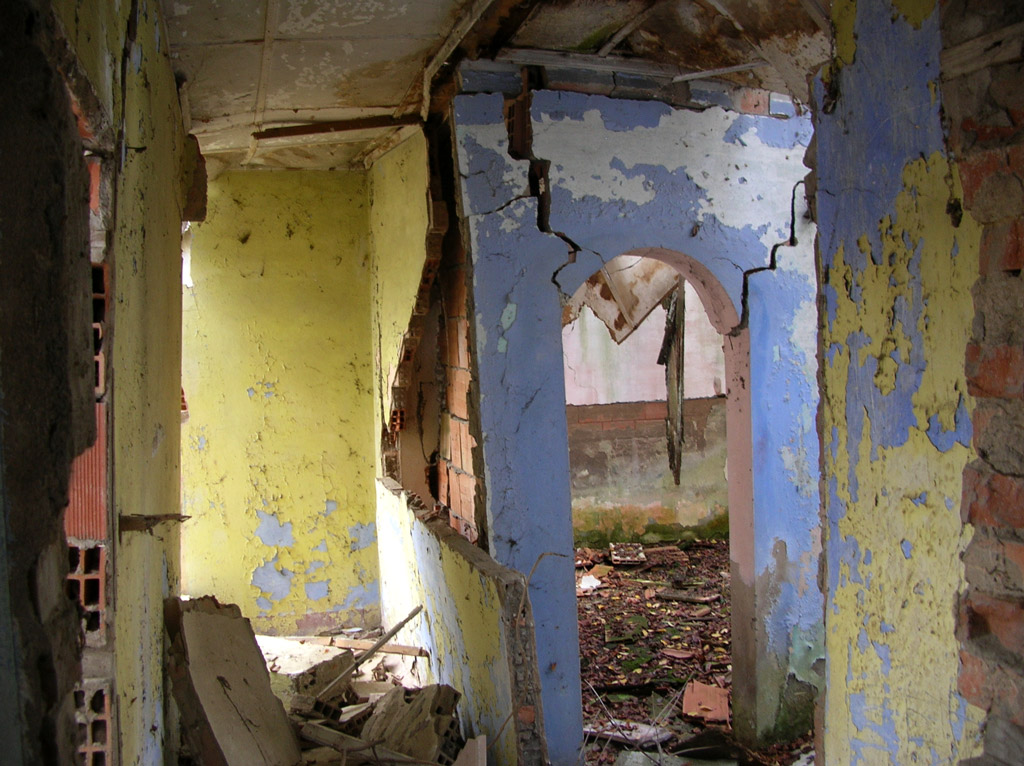
Interiors of the Nomadelfia orphanage
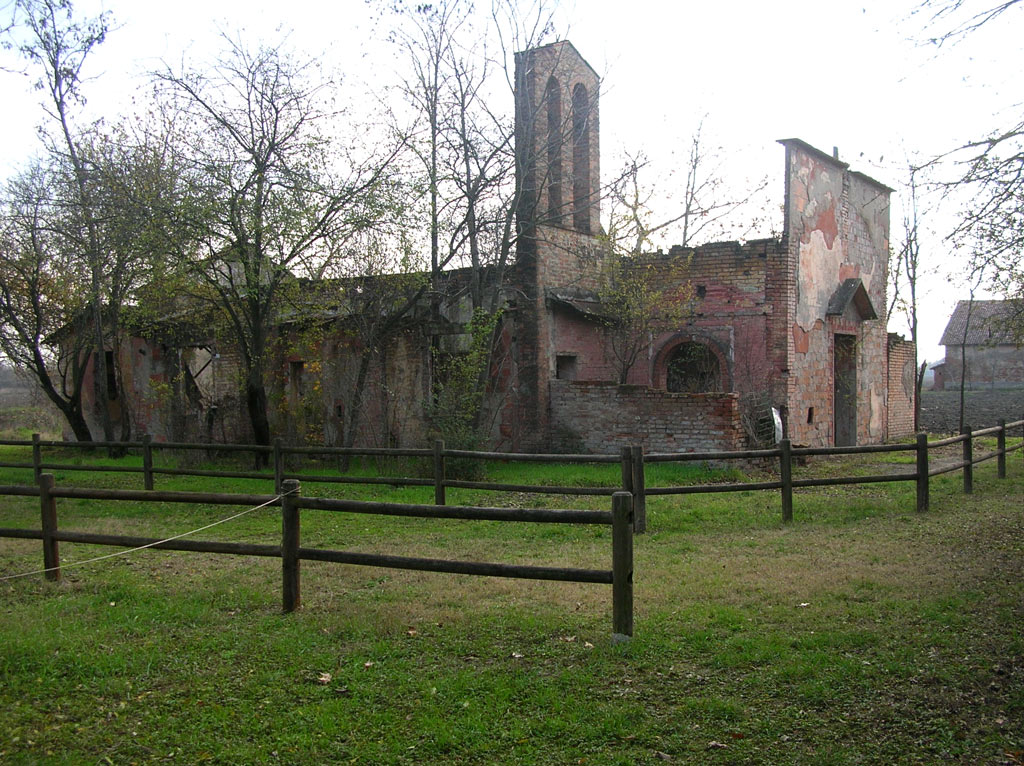 Church of Nomadelfia
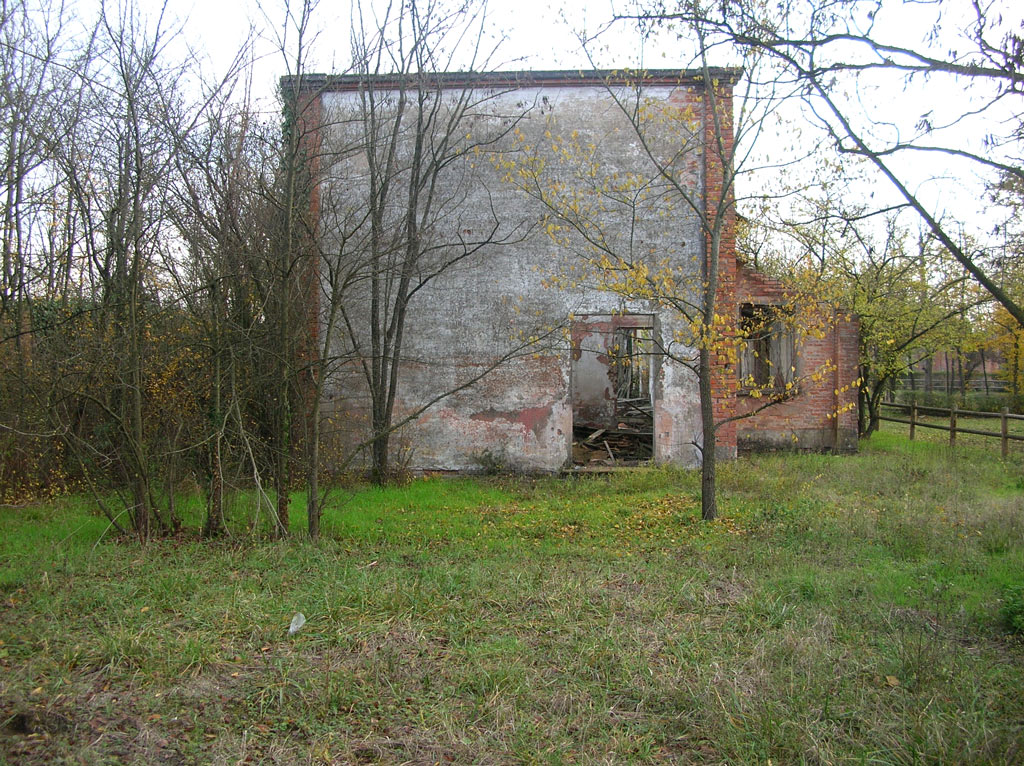 Open-air cinema
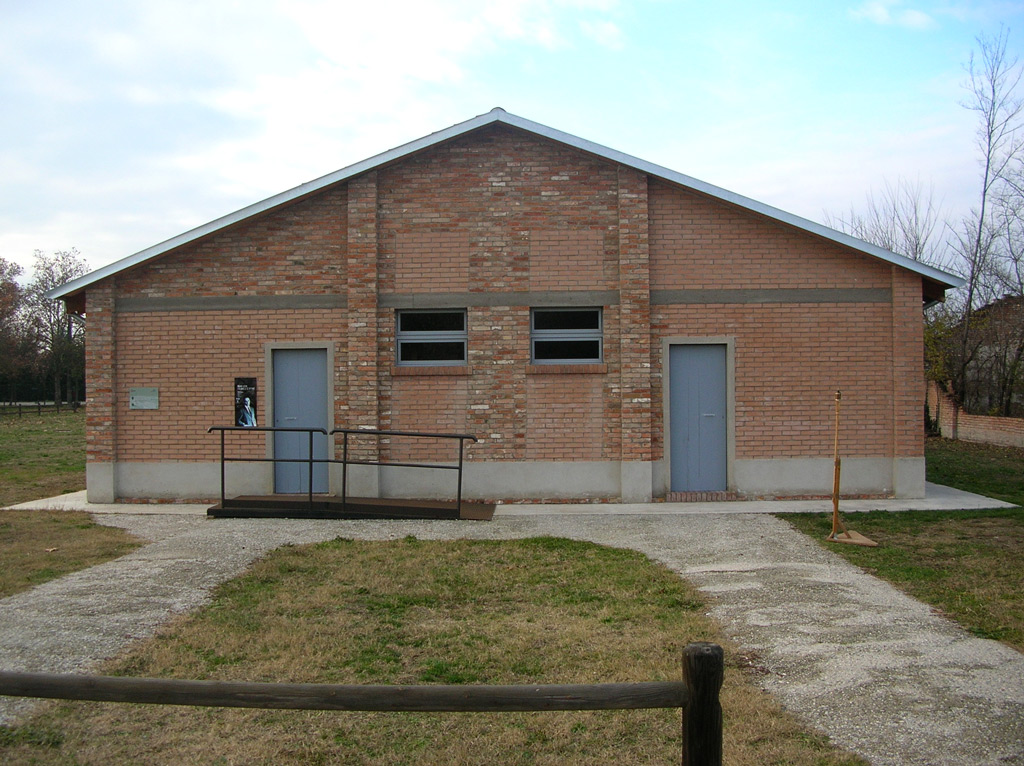 The museum is situated inside some restored barracks